Manufacturer of Primary Unit Substation Solutions
| Technical Parameter | Unit | Value |
|---|---|---|
| Rated voltage | kV | 40.5 |
| Rated current | A | 400~3150 |
| Rated frequency | Hz | 50 |
| Rated power | kVA | 1250~20000 |
| Insulation level | kV | 65 Impact 185 |
| Model Information | Description |
|---|---|
| Altitude | Does not exceed 2000m |
| Ambient temperature | -25℃~40℃ |
| Relative humidity | Daily average ≤95% |
| Installation site | No fire, explosion hazards |
Product Manufacturing Process
The manufacturing process of primary unit substations involves a rigorous series of steps to ensure high standards of safety, efficiency, and reliability. Initially, detailed design plans are developed, considering specific voltage levels, structural integrity, and environmental conditions. Certified materials are then sourced and inspected to meet stringent quality norms. The assembly phase includes integrating components like transformers, circuit breakers, and busbars, with precise calibration and testing. Each substation undergoes real-world simulations to ensure operational readiness. Recent studies highlight that automated manufacturing systems have notably reduced production times while enhancing accuracy and consistency. In conclusion, advancing technology and meticulous quality control propel the superior manufacturing of primary unit substations.
Product Application Scenarios
Primary unit substations are essential in diverse settings, especially in urban and industrial landscapes. These substations play a crucial role in electricity distribution, maintaining stability and efficiency across multiple sectors. In industrial complexes, primary unit substations are often located near production facilities to ensure a direct, uninterrupted power supply, crucial for operations that demand high energy loads. In commercial and residential neighborhoods, these substations integrate into broader grid systems, fundamentally supporting day-to-day life and economic activities. A review of contemporary studies illustrates the adaptability and essential nature of primary unit substations in minimizing disruptions and accommodating varying power needs.
Product After-Sales Service
Our company offers comprehensive after-sales services for our primary unit substations, including routine maintenance checks, emergency support, and component replacements. Technicians are available 24/7 to address any operational issues, ensuring your systems run smoothly. Additionally, we provide tailored service packages to meet specific customer needs, ensuring the longevity and reliability of your investment.
Product Transportation
Global Power Equipment ensures that all primary unit substations are transported following best practices in logistics, using robust packaging to prevent damage during transit. We handle both domestic and international deliveries, coordinating with experienced logistics partners to guarantee timely and safe arrival. Customers can track shipment progress in real-time through our online portal.
Product Advantages
- Reliability: Renowned for consistent performance across diverse environments.
- Efficiency: Optimized for minimal energy loss and high operational efficiency.
- Cost-effective: High quality at competitive prices, ensuring value.
- Advanced Technology: Incorporates cutting-edge innovations for superior functionality.
- Custom Solutions: Tailored configurations to meet specific client needs.
Product FAQ
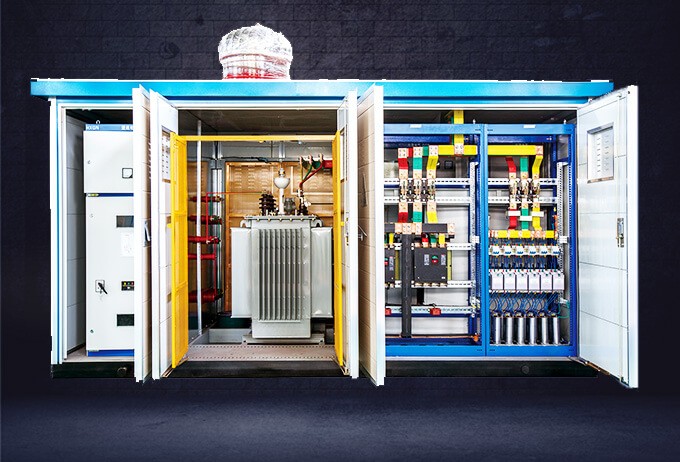
- What are the primary components of a primary unit substation? Each substation primarily includes transformers, switchgear, busbars, protection equipment, and control systems. The manufacturer ensures that these components function cohesively to manage power distribution efficiently.
- How does a primary unit substation improve power distribution? It serves as a vital node, transforming high-voltage electricity to lower levels suitable for end-user applications while managing load and ensuring fault isolation for stable power supply.
- Can the primary unit substation handle environmental challenges? Yes, it is designed to withstand adverse conditions such as temperature fluctuations and high humidity, adhering to international environmental standards.
- What kind of maintenance does a primary unit substation require? Regular maintenance includes inspecting and testing components like transformers and switchgear, which is facilitated by our manufacturer’s comprehensive support service.
- Is the installation process complex? Typically, installations are managed by skilled technicians, following the manufacturer’s detailed guidelines to ensure optimal setup and operation.
- How does the temperature auto-control device work? This device regulates internal substation temperatures, counteracting external heat influences, maintaining safe operational levels.
- What are the customization options available? Substations can be customized with varying voltage ratings, component types, and built to fit specific site conditions as per the manufacturer’s offerings.
- How is safety ensured in these substations? Safety is paramount, with built-in circuit breakers, SCADA systems, and protective relays that safeguard against faults and anomalies.
- What standard does this product comply with? It meets standards like GB/T17467-1998 and DL/T537-93, ensuring the highest quality and reliability set by the manufacturer.
- Do manufacturers offer training for operating these substations? Yes, comprehensive training programs are available to help customers understand operational and maintenance intricacies.
Product Hot Topics
- Impact of Advanced Power Transformers on Efficiency As a manufacturer, our primary unit substation integrates top-of-the-line power transformers, significantly enhancing overall distribution efficiency. These advancements allow for reduced energy loss and more reliable service, crucial in supporting the growing global energy demands. Recent studies highlight that efficient transformers can lead to substantial cost savings and lower carbon footprints, aligning with sustainable development goals.
- Role of Circuit Breakers in Modern Substations Circuit breakers play a critical role in the functionality of primary unit substations. As a manufacturer, we ensure that our products are equipped with state-of-the-art circuit breakers that offer reliable fault detection and interruption capabilities. This technology safeguards infrastructure and enables quick responses to anomalies, minimizing downtime and protecting investments.
- Importance of Remote Monitoring and Control Systems Integrating SCADA and advanced control systems into primary unit substations allows for seamless remote operation and monitoring. This not only improves efficiency but also reduces the manpower required on-site. As a manufacturer, we emphasize integrating such systems to meet modern demands for automated and smart grid solutions.
- Future Trends in Substation Design With ongoing advancements, manufacturers are continually evolving substation designs to incorporate digital technologies and enhance interoperability. The shift towards digital substations brings forward improvements in data analytics, predictive maintenance, and operational efficiency, setting a new standard in power distribution.
- Ensuring Environmental Compliance Modern primary unit substations are designed to meet stringent environmental regulations. Our manufacturing processes prioritize eco-friendly practices, minimizing waste and emissions. This commitment not only satisfies regulatory criteria but also contributes to broader environmental preservation efforts.
- Custom Solutions for Diverse Applications Manufacturers offer customized primary unit substations to address specific industry needs, from urban settings to industrial applications. Tailored designs ensure that each installation meets unique voltage requirements and operational challenges, offering flexibility and reliability.
- Enhancing Safety with Innovative Design Safety remains a top priority in primary unit substation design. Manufacturers incorporate advanced protective measures like enhanced insulation, fault detection systems, and fail-safe mechanisms, ensuring robust protection against potential hazards.
- The Economic Impact of Efficient Power Distribution Efficient power distribution facilitated by primary unit substations boosts economic productivity. By reducing transmission losses and enhancing reliability, manufacturers contribute substantially to stable energy supply, which is crucial for industrial growth and community development.
- Integrating Renewable Energy with Traditional Grids As renewable energy sources become more prevalent, manufacturers are adapting primary unit substations to integrate seamlessly with these new inputs. This transition supports sustainable energy goals while maintaining grid reliability and efficiency.
- Challenges in Substation Upgrades and Maintenance Upgrading existing substations to incorporate modern technology presents certain challenges. Manufacturers provide essential insights and solutions, ensuring that transitions are cost-effective and meet the latest technological standards without compromising operational integrity.
Image Description